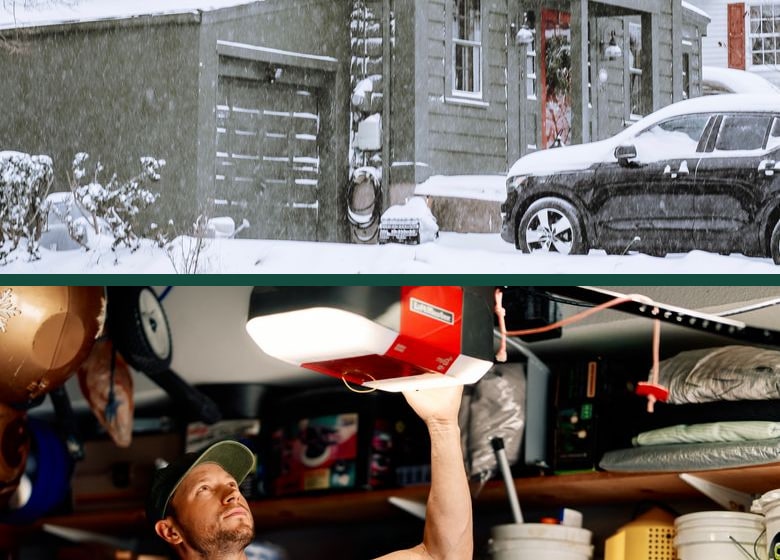

Is It the Opener or the Door?
Before you troubleshoot the opener, figure out whether it's actually the problem.
- If nothing happens at all when you press the remote or wall button, the issue is likely power, batteries or the opener itself.
- If the opener runs but the door won't move, or it reverses, the door is usually the problem. Ice, a broken spring or stiff hardware is making the door too hard to lift, and the opener is doing its job by stopping.
Quick check: Look along the bottom of the door for ice along the seal, and look above the door for a gap in the torsion spring. If you see either, the opener probably isn't to blame.
Common Symptoms & Likely Causes
| What the opener is doing | Likely cause |
|---|---|
| Nothing at all, no lights or sound | No power, tripped GFCI outlet, tripped breaker |
| Wall button works, remote doesn't | Weak remote batteries, lock mode on, remote out of range |
| Door closes partway, then reverses | Frosted or misaligned safety sensors, ice or binding adding resistance |
| Door stops short of fully open or closed | Travel limits affected by cold, extra drag from stiff hardware |
| Motor hums but the door doesn't move | Failing capacitor, stripped drive gear, or a door that's too heavy |
| Opener runs, then quits until it cools down | Motor overheating from repeated attempts against a stuck door |
| Opener is slow and straining | Thickened lubricant on the rail or hardware, or a door that's out of balance |
Why Openers Struggle in Cold Weather
Stiff Lubricant and Hardware
Grease on the opener rail, rollers and hinges thickens in freezing temperatures. That extra drag means the opener has to work harder, and many openers will stop or reverse when they sense the added resistance.
Force and Travel Limit Settings
Your opener's force and travel limits tell it how hard to push and where to stop. Metal contracts in the cold, and a door that was perfectly adjusted in summer may stop short or reverse in winter.
Frosted Safety Sensors
The safety sensors near the floor send an invisible beam across the opening. Frost, condensation or snow on the lenses can block that beam, so the door won't close or keeps reversing.
Weak Batteries
Cold temperatures reduce battery output. Remotes, exterior keypads and opener battery backup units are all more likely to fail on a frigid morning.
Worn Gears and Motor Parts
Openers that are already worn often fail in the cold because starting a stiff door takes the most effort. A humming motor with no movement often points to a failing capacitor or a stripped drive gear.
Troubleshooting You Can Safely Try
- Check the power. Make sure the opener is plugged in, then press reset on the GFCI outlet and check the breaker.
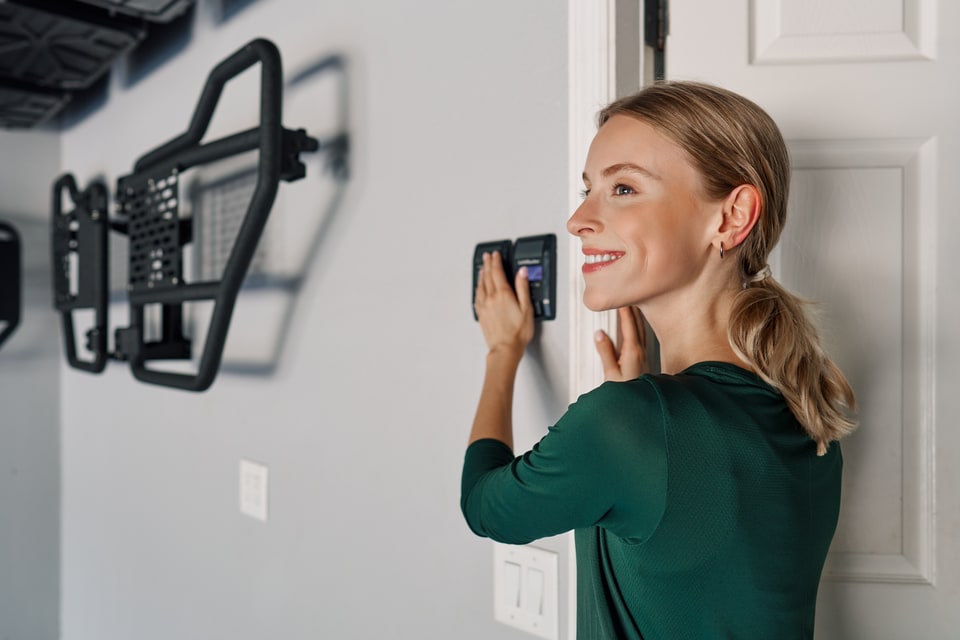
- Check the wall control. Turn off lock or vacation mode if it's on.
- Replace the batteries in your remote and keypad.
- Clean the safety sensors. Wipe both lenses and make sure the indicator lights are steady, not blinking.
- Clear ice from the bottom of the door.
- Let the motor rest. If it ran several times and stopped, it may have overheated. Wait about 20 minutes before trying once more.
If the opener still won't run, or it runs but can't move the door, it's time to call a professional.
Don't Just Turn Up the Force
It's tempting to increase the force setting so the opener can push through the cold. But the force setting is part of what makes the auto-reverse work. Raising it can hide a failing spring or a frozen seal, and it can make the door less likely to reverse if something, or someone, is in its path. Let a technician check the door's balance and adjust the opener the right way.
Repair or Replace Your Opener?
A Repair Usually Makes Sense When
- The opener is relatively new and the problem is a single part, like a gear, capacitor or sensor
- The motor runs well once the door itself is repaired
- You're happy with how the opener performs the rest of the year
Replacement May Be Recommended When
- The opener is older and struggles every winter
- Repair costs are approaching the price of a new unit
- It lacks modern safety features, like safety sensors
- You want quieter operation, battery backup or smartphone control
Why Choose Precision for Opener Repair
- Technicians trained to check the whole system, so we fix the real cause
- Trucks stocked with common opener parts, remotes and sensors
- Service for most major opener brands
- A clear price before any work begins
- Every repair finishes with a test of the auto-reverse and safety sensors
Same-day and emergency service available. Calls are answered by a live operator 24/7.
Schedule Garage Door Opener Repair Today
Don't let a cold-weather breakdown leave you stuck. Book online to see the next available appointment, or call and we'll get a technician headed your way.
Frequently Asked Questions
Table of Contents
Garage Door Opener Cold Weather FAQs
Why did my garage door opener stop working when it got cold?
Cold weather thickens lubricant, drains batteries, frosts the safety sensors, and adds resistance the opener reads as a problem. It can also push an already worn gear or motor part past its limit.
Why does my garage door go down, then back up, in cold weather?
The opener is sensing an obstruction. That's usually frost on the safety sensors, ice along the bottom of the door, or stiff hardware adding resistance.
Why does my opener hum but the door won't move?
A humming motor with no movement often means a failing capacitor, a stripped drive gear, or a door that's too heavy to lift because of a broken spring. Don't keep pressing the button. Call a professional.
Should I adjust the force on my opener in the winter?
We don't recommend it. A higher force setting can hide problems with the door and make the auto-reverse less reliable. Have the door's balance checked first.
Does cold weather affect garage door remote batteries?
Yes. Batteries lose power in the cold, so a remote or keypad that worked in fall may stop responding on a frozen morning. New batteries are an easy first fix.
Can a broken spring make it look like my opener stopped working?
Yes. The springs do most of the lifting. When one breaks, the opener can't lift the door's full weight, so it may hum, strain or stop after a few inches.
Is it better to repair or replace a garage door opener?
It depends on the opener's age, condition and the part that failed. Your technician will walk you through both options and the price of each before any work begins.