When it comes to garage door construction, there are 1-, 2-, and 3-layer doors.
Each layer of construction adds stability and durability to your door.
|
|
1-layer construction is
uninsulated and consists of a single sheet of steel. This is best used in detached garages without an opener when you are not storing valuable items inside. If you wish to use this type of door with an opener, the door needs to be reinforced. |
|
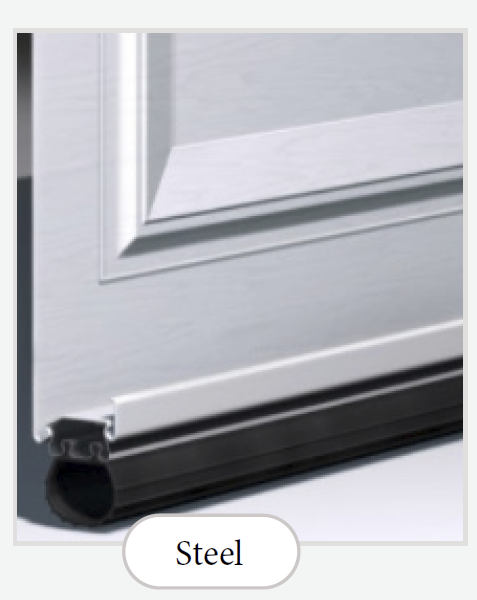
2-layer construction
consists of a steel front and a layer of polystyrene insulation backed by a thin layer of vinyl. This is best used in fairly inactive driveways as the door can become dented, but this can be used with an opener. |
|
|
|
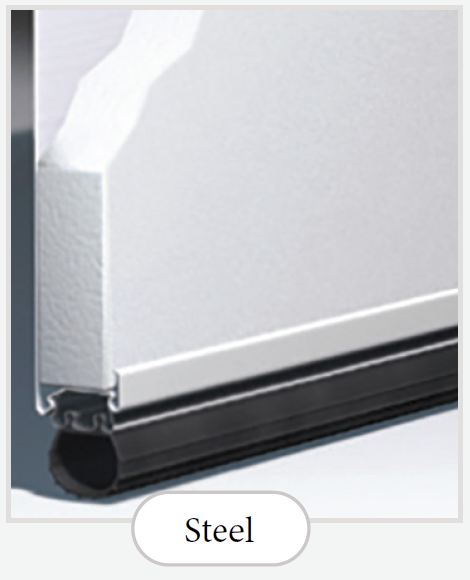
3-layer constructions are a complete
sandwich. One layer of material, a layer of insulation (polystyrene or polyurethane), and a backing layer that matches the front material. This is the most durable construction, and the only one used by all* material types. |
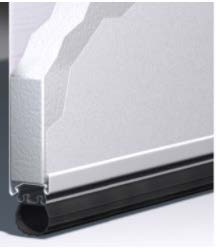
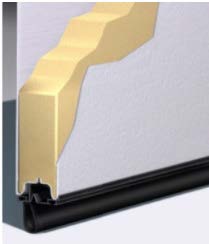
Insulation
Insulation isn’t just about keeping your garage warm or cool.
It is also an important factor in the durability and security of your door.
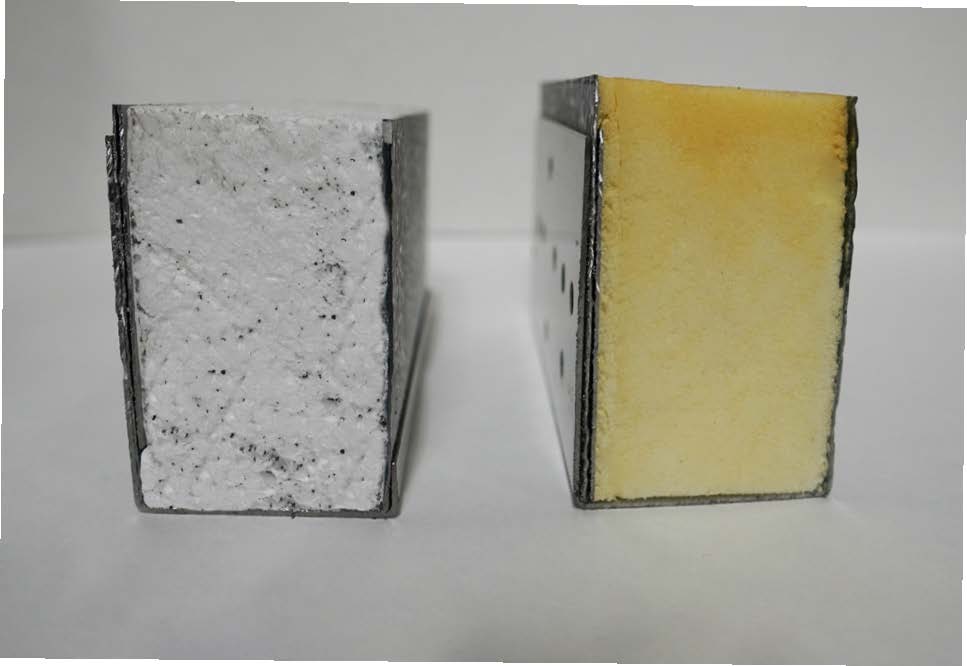
Types of InsulationThere are two different types of insulation used in garage doors: polystyrene and polyurethane. Polystyrene is the same material used for a foam cooler and is cut to size and then placed within a garage door panel. If it is part of a 2 layer steel door, it will have an additional vinyl backing to make it easier to clean–but is susceptible to damage from inside the garage. It adds rigidity to the door and typically has an R-value between R6–R10. Polyurethane is a spray injected, expanding foam insulation. As it is sprayed in the door from both sides, it expands to fill every nook and cranny inside the door which adds rigidity. Polyurethane has an R-value of R12–R19, on average. |
|
R-Value
R-value is the measure of resistance to heat flow through a material. Insulation is meant to stop the movement and transfer of heat, however, heat can enter and leave your home in two ways: conduction, which R-value measures, and air infiltration, which it does not.
|
|
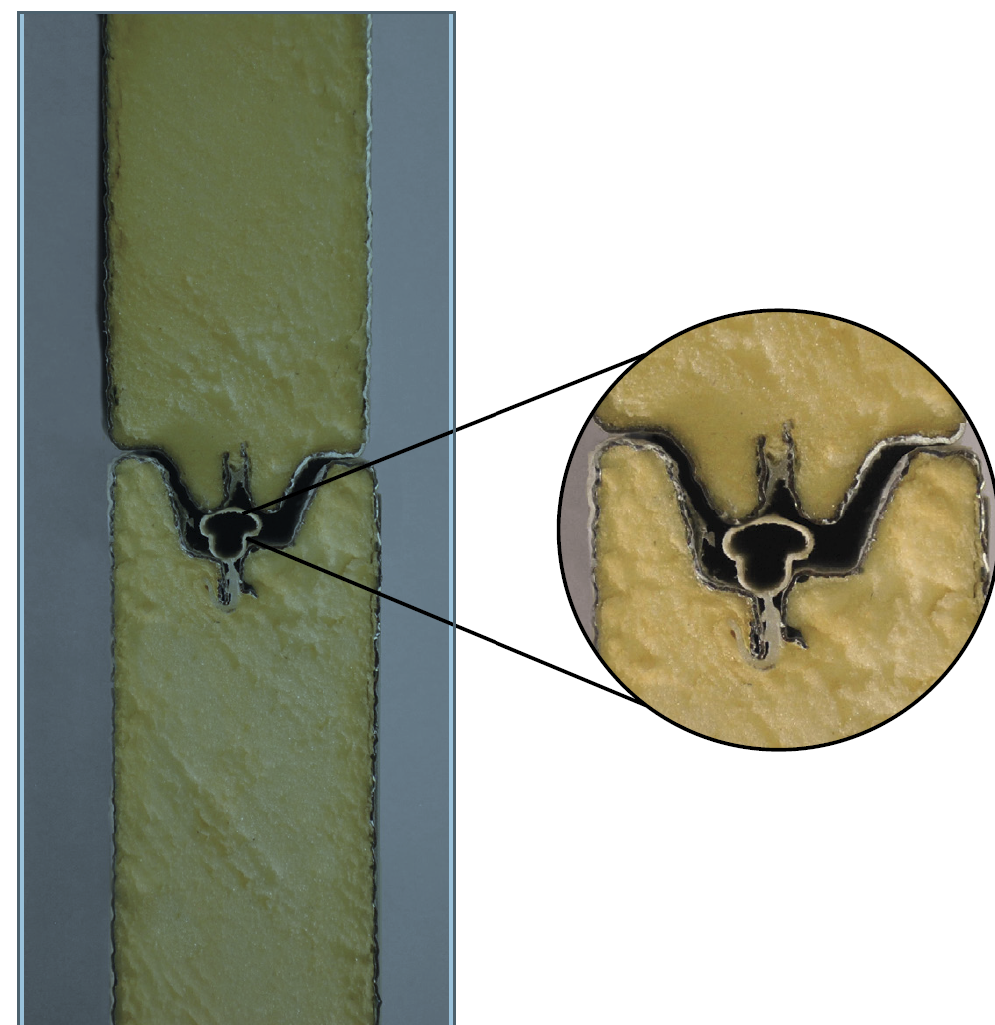
Conduction is the transfer of heat through a surface
by direct contact. For garage doors, conduction is eliminated through thermal breaks. Most often used in 3 layer steel doors with polyurethane insulation, thermal breaks help eliminate the transfer of heat by breaking the continuity of the steel between the front and back of the door. A small strip of rubber, like in the image to the left, is placed between the steel on the front of the door and the steel on the back of the door. This makes it so that the front and back no longer touch and the heat/cold can't transfer between the two sides. |
Air Infiltration - If your garage door is not properly sealed around your door frame, air infiltration can result in heat loss and ultimately eliminate the R-value of your garage door.
|
|
|
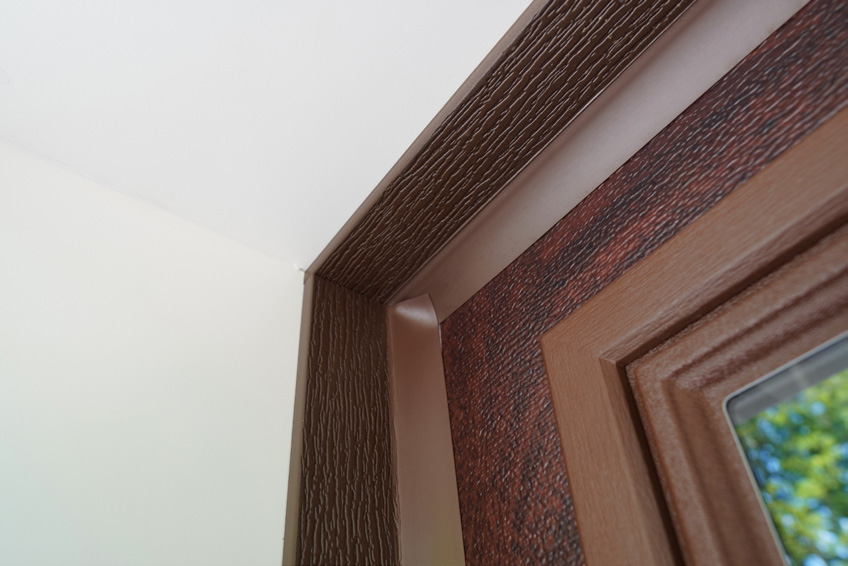
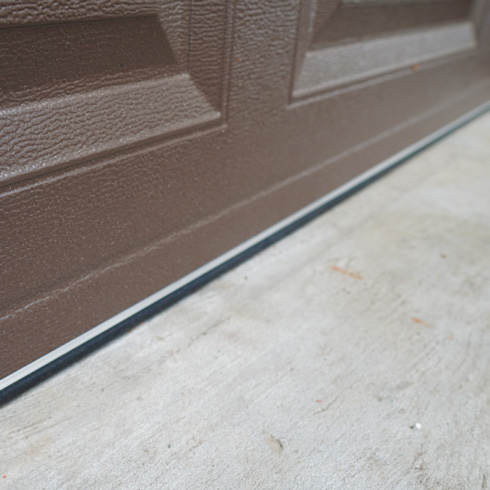
Weather seal is the vinyl flap that is placed around the outside frame of a garage door. It helps to stop the air infiltration around the opening of the garage door. This strip should be both nailed and then back caulked to ensure air does not penetrate the door opening. Previously, strips of wood were placed around the edge of the opening to keep air and pests out. So if you currently have just a wood strip, you’ll find that the addition of new weather stripping with a vinyl flap will greatly reduce air flow. Bottom rubber is applied to the bottom of a garage door to stop air, dirt, bugs, and pests from entering the garage. The bottom rubber is not designed to keep water out of your garage. This issue needs to be addressed through grade issues on your driveway. |